
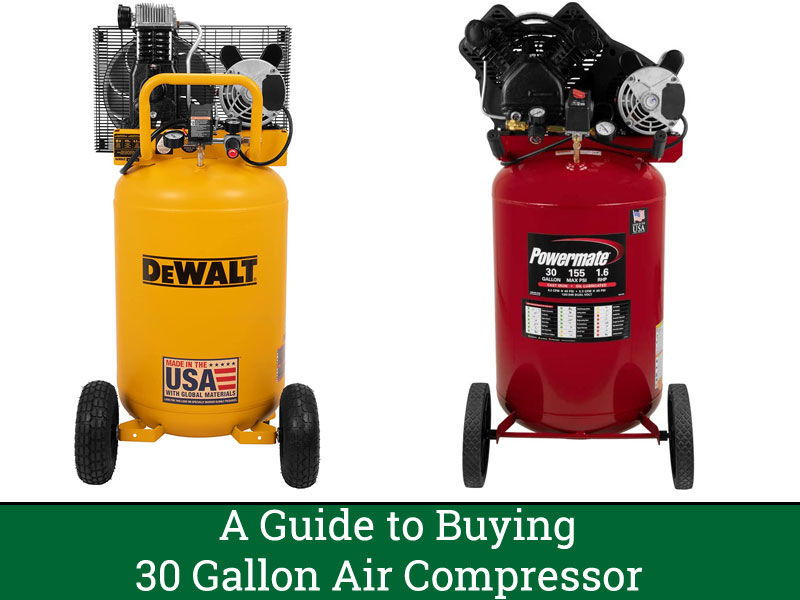
A Guide To Buying A 30 Gallon Air Compressor
Disclosure: This post may contain affiliate links, meaning if you decide to make a purchase via my links, I may earn a commission at no additional cost to you. See my disclosure for more info.
If your in the market for a new air compressor and you think that a 30 gallon air compressor might be right for you but you still have questions, then you have come to the right place. It is precisely for people like yourself that we have written a guide to buying a 30 gallon air compressor for.
We know that there is a lot of information out there, and we also know that a lot of it is confusing so in our guide to buying a 30 gallon air compressor we will try and give you plain speaking information that we think you will find helpful in determining if a 30 gallon air compressor is the right choice for you. Lets dive right in.
Table of contents
- Who Should Buy 30 Gallon Air Compressor?
- The Purpose of Purchasing a 30 Gallon Air Compressor?
- Models - 30 Gallon Air Compressor
- Noise Generated - 30 Gallon Air Compressor?
- Horsepower - 30 Gallon Air Compressor
- Durability - 30 Gallon Air Compressor
- Frequently Asked Questions
- Final Thoughts
- More Resources
Who Should Buy 30 Gallon Air Compressor?
The ideal buyer for a 30-gallon air compressor would generally be anyone that requires a moderate amount of compressed air for tasks such as powering pneumatic tools or inflating tires. Their air requirements are such that they are not intending to rely heavily on the compressor for long period of time where a larger capacity air compressor would be more appropriate.
This makes a 30 gallon air compressor a good fit for the DIY enthusiast, small auto repair shops, and contractors who need a portable yet powerful air compressor for their daily work task which could range from the simple household tasks to a much more complex usage such as the lifting of heavy products, separation of pieces of equipment, spray paintings and lots of others.
Irrespective of the reason to which a 30-gallon air compressor is purchased for, handling of this device and a knowledge of how it works is essential. for when it comes to purchasing an air compressor this knowledge will be a prerequisite for the users choice (the model of the compressor specifically, and the budgeted cost). Thus, considering these determining factors, certain things must be adhered to before going for an air compressor. These things include but not limited to:
The Purpose of Purchasing a 30 Gallon Air Compressor?
The purpose is a very essential determinant when considering a 30-gallon air compressor. As noted earlier, there are varieties of air compressors which the user can choose from. The earlier a user determines the specific requirements for which the compressor will serve, the better the chances of serving that basic purpose effectively will be.
The capacity of an air compressor is one basic feature to watch out for when considering it for any purpose. This, for example, is evident in a cylinder which requires high-pressure clean air. In this scenario, the capacity and size of an air compressor would facilitate the quality of high-pressure air supplied to such cylinder. This same mechanism of air supply is applicable to power pneumatics, tyres, and tanks.
Along with the usage stated above, an air compressor can also provide moderate pressure clean air for offices and schools.
Models - 30 Gallon Air Compressor
Two specifications of air compressor exist and must be considered. These are; the Single stage compressor and the two-stage compressor.
As the difference in the name suggests, so does their functions.
In a single stage air compressor, the air in the tank is sucked in its cylinder. This brings by compression of some sort which is released and serves as a form of energy and is evident in some lesser horsepower compressors like the 120 PSI compressors.
The process of formation of air into energy is the same in the two-stage compressor. The only difference here is that the air does not go to the tank directly, rather it goes to one smaller piston again for another stroke. This time, the air released after passing through two pistons get more pressure. It is then delivered back to the tank where it serves as energy. This is applicable to 175 PSI horsepower compressors.
Noise Generated - 30 Gallon Air Compressor?
The noise generated by a 30-gallon air compressor depends on the brand and the work done with it. Several factors, including the what type of compressor, the horsepower of the motor, the size of the air tank, and the distance from the air compressor will all contribute to the noise being heard. However, as a general guideline, most 30-gallon air compressors will generate noise levels from between 70 and 90 decibels (dB) when in operation.
To give you some general context, 70 dB is roughly equivalent to the noise level you would hear from a vacuum cleaner, while 90 dB is similar to the noise level heard from a motorcycle or a chainsaw. Subjecting yourself to prolonged exposure to noise levels above 85 dB can cause people hearing damage, so it is very important that you wear hearing protection at all times when operating a 30-gallon air compressor or any other loud machinery.
Horsepower - 30 Gallon Air Compressor
Air compressor motors come with power rating which is measured in HP (Horsepower) and represents the amount of work done by the compressor per unit of time.
In general the higher the horsepower rating of an air compressor's motor, the greater the amount of compressed air the compressor will be able to produce in a given time period.
Knowing what the air compressor's horsepower rating is makes up a crucial factor for you to consider when selecting whether an air compressor is suitable for a particular application, as the amount of horsepower affects the compressor's performance and efficiency.
You may be tempted just to go for the air compressor which has the largest horsepower rating, but if running cost is a concern then it is best to choose a 30 gallon air compressor which has a horsepower rating sized to your needs, taking the time to do so will same you money over the life of the air compressor.
Durability - 30 Gallon Air Compressor
Every buyer purchases goods with the mindset of using them for a long period of time, and it is no different when considering purchasing a 30 gallon air compressor.
The durability of an air compressor is a factor of great importance to be considered before the purchase of any air compressor.
Durability of an air compressor entails easy usage, easy maintaining capabilities, and built with quality materials. Some common durability factors of an air compressor to take into consideration include:
Build quality: The quality of the materials used in the construction of any air compressor plays a crucial role in determining its durability. High-quality metals, durable plastics, and robust seals and gaskets all ensure that the air compressor can withstand the wear and tear of regular use.
Lubrication system: Excessive wear is a killer of any air compressor so proper lubrication is essential to ensure the moving parts of the air compressor function smoothly. A reliable oil filter and high-quality lubrication system with sufficient oil capacity can extend the life of an air compressor.
Motor protection: The heart of an air compressor is it's motor, and being able to protect it from damage is essential for its longevity. Having an air compressor with features like thermal overload protection, voltage surge protection, and even low oil shutdown can prevent the motor from incurring damage and extend it's life.
Cooling system: Air compressor generate lots of heat during their operation, which inturn can cause damage to its components. Having a high-quality cooling system that includes a reliable fan, heat dissipation fins, and a temperature sensor can all help to prevent overheating and prolong the life of any air compressor.
Maintenance: Conducting proper maintenance is essential for the longevity of an air compressor. Having regular oil changes, filter replacements, and visual inspections of belts and moving parts can catch problems early and thereby prevent them from becoming more significant issues.
By paying attention to all of these durability factors, an air compressor has the best chance of providing reliable and long-lasting performance for years to come.
Frequently Asked Questions
Q: Is a 30 gallon air compressor big enough?
A: Whether or not a 30 gallon air compressor is big enough depends on its intended use. If you intend on using it for small tasks such as inflating tires or powering a brad nailer, then a 30 gallon compressor would be more than sufficient. However, if you intend on using it for larger tasks such as sandblasting or running multiple pneumatic tools simultaneously, then a larger compressor with a higher capacity would most likely be required.
Additionally, the compressor's CFM (cubic feet per minute) rating should be taken into consideration, as it determines the amount of air that the air compressor can deliver. Overall though, a 30 gallon air compressor can be suitable in meeting many users needs especially for DIY and home shop situations.
Q: How do I know what size air compressor I need?
A: To determine what size of air compressor you will need, you will first need to consider what type of tools or equipment you plan to use.
Look at the air consumption rate (CFM) of each tool, and add them up to get the total CFM required. You'll also need to take into consideration the pressure (PSI) required by your tools. Once you have determined these numbers multiply the CFM by about 1.5, this will give you a safety margin, now you can choose an air compressor that meets or exceeds those requirements.
It's important to remember when purchasing an air compressor that a larger compressor will generally provide you with more power and efficiency, but it will also cost more to run.
Q: Does tank size matter air compressor?
A: The answer to this question depends on the application of the air compressor. The size of an air compressor tank determines how much compressed air can be stored and available for use at any given time.
A larger tank size is useful when needing to power tools that require higher volume of air, such as sanders, grinders, or paint sprayers.
A smaller tank size may be more suitable in lighter applications, such as inflating tires or powering small air tools. Therefore, when it comes to selecting an air compressor, it is important to consider what the intended use will be and to choose a tank size that will meet the specific requirements.
Q: What is a good size air compressor for a shop?
A: The correct size of air compressor for a shop depends on the types of tools and equipment that are going to being used. A good rule of thumb is to choose an air compressor that has a capacity of at least 1.5 times the CFM (cubic feet per minute) rating of the highest CFM tool or equipment to be used.
For example, if the highest CFM tool in the shop is rated at 10 CFM, then an air compressor that has a capacity of at least 15 CFM would be recommended. Additionally, the size of the air tank should be large enough so as to provide adequate air storage for the tools being used.
A 60-gallon tank would be a good size as a starting point for use in most small to medium-sized shops.
Final Thoughts
To cap it all off, having the technical knowledge, usability and durability requirements, are all essential when considering a 30-gallon compressor. Hopefully we have been able to answer a lot of your questions and you now feel more confident in knowing if a 30 gallon air compressor is the right choice for you.
In our opinion the ideal buyer for a 30-gallon air compressor would generally be the DIY enthusiast, small auto repair shops, or contractors who need a portable yet powerful air compressor for their daily work tasks, which would be tasks such as powering pneumatic tools or inflating tires. Their air requirements would be such that they are not intending to rely heavily on the air compressor for long period of time where a larger capacity air compressor would be more appropriate.
The main thing you need to ensure is that you get an air compressor that fits your needs perfectly and we hope that our guide to buying a 30 gallon air compressor has helped you achieve this.
More Resources
We hope you found our article helpful, if you would like to read some more of our articles then we think these below may be interesting for you.